Natural religion (The Book of Nature)
The Last of the MohicansNatural religion (The Book of Nature) is Hawkeye’s conviction that the created world reveals its Maker without the mediation of books or theological systems. The idea comes into focus after the rescue of the captives, when Hawkeye and David Gamut dispute how Providence, human action, and salvation should be understood. Their exchange contrasts the authority of lived observation with the authority of learned religious doctrine.
The Book of Nature
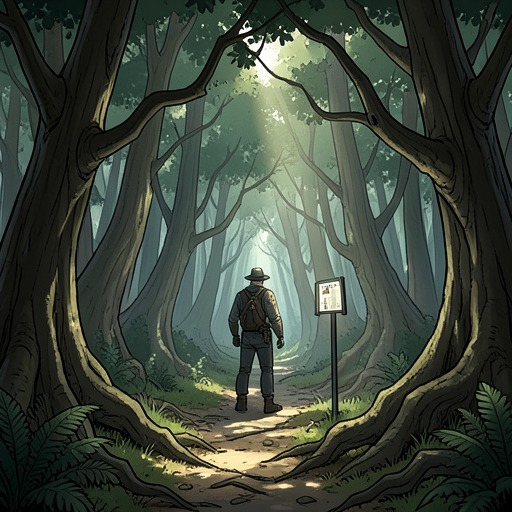
Hawkeye describes the wilderness as a readable volume: anyone who follows him through the forest, he argues, will see enough to recognize both the existence and the power of God. He contrasts that direct instruction with people who consult books in order to convince themselves that God exists. In his view, human beings may obscure the evidence through the works of settlement, but the natural world makes the Creator’s goodness and power plain to an attentive observer.
The phrase also gathers meaning from the novel’s landscape writing. At Glenn’s Falls, Hawkeye describes water that leaps, tumbles, changes direction, and seems to resist order, yet is gathered again and continues toward the sea according to an original design. The narrator confirms the physical accuracy of the description while noting that later development has impaired the falls’ beauty. The scene thus places close practical observation beside a providential reading of nature: the landscape is at once a real terrain and evidence, for Hawkeye, of a governing hand.
Debate with David Gamut
The dispute follows the group’s escape from danger. Hawkeye credits the outcome to what was foreordained, but resists Gamut’s confident doctrine that some are predestined to salvation and others to damnation. He says he can credit what he has witnessed, such as an enemy falling by his hand, but will not accept a final judgment on Chingachgook without warrant. His objection is not a denial of God; it is a refusal to let abstract doctrine claim certainty about matters he cannot know.
Gamut, by contrast, treats predestination as a consoling truth and demands scriptural authority for Hawkeye’s position. Hawkeye rejects the demand that religious understanding must be established through books, calling himself a man without a cross and presenting the natural world as his text. Their disagreement exposes a difference in method: Gamut reasons through inherited theological language, while Hawkeye grounds belief in observation and limits his claims to what experience can support.
Faith in Action
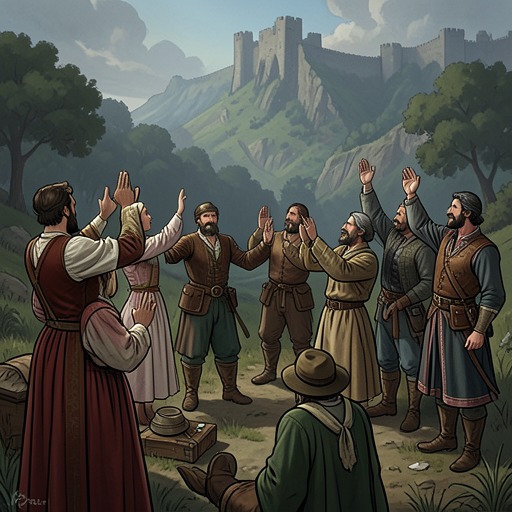
The surrounding scenes show that religious language is not confined to debate. When the captives appear safe, Duncan Heyward gives thanks to Heaven, and Alice responds with fervent gratitude. At another moment, Cora asks Magua to leave her so she can pray. These distinct expressions of faith place Hawkeye’s natural theology among other forms of religious practice in the story, rather than making it the only spiritual outlook.
Gamut’s sacred singing likewise marks his own religious identity. He insists that his voice is reserved for sacred song and praises the New England psalm book he carries; after the rescue, he thanks Hawkeye for the victory and prepares to sing in thanksgiving. The novel sets this formal, text-based piety beside Hawkeye’s appeal to the open wilderness, presenting neither as a mere abstraction: each shapes how its adherent interprets danger, deliverance, and obligation.
Significance
The Book of Nature gives Hawkeye a faith that is affirmative but wary of theological certainty. His belief allows him to recognize Providence in survival while preserving a distinction between what he has seen and what no human observer can establish. Against Gamut’s doctrinal confidence, Hawkeye’s position makes humility before the limits of knowledge part of religious conviction.
The idea is also bound to the novel’s treatment of landscape. The forest and falls are not simply picturesque settings: they shelter the travelers, complicate their movement, and prompt Hawkeye to read design in apparent disorder. The narrator’s note that human improvement has diminished the falls’ beauty adds a tension between natural order and settlement. In this way, the Book of Nature joins a debate about belief to the novel’s recurring contrast between wilderness as a source of knowledge and the changes imposed upon it.